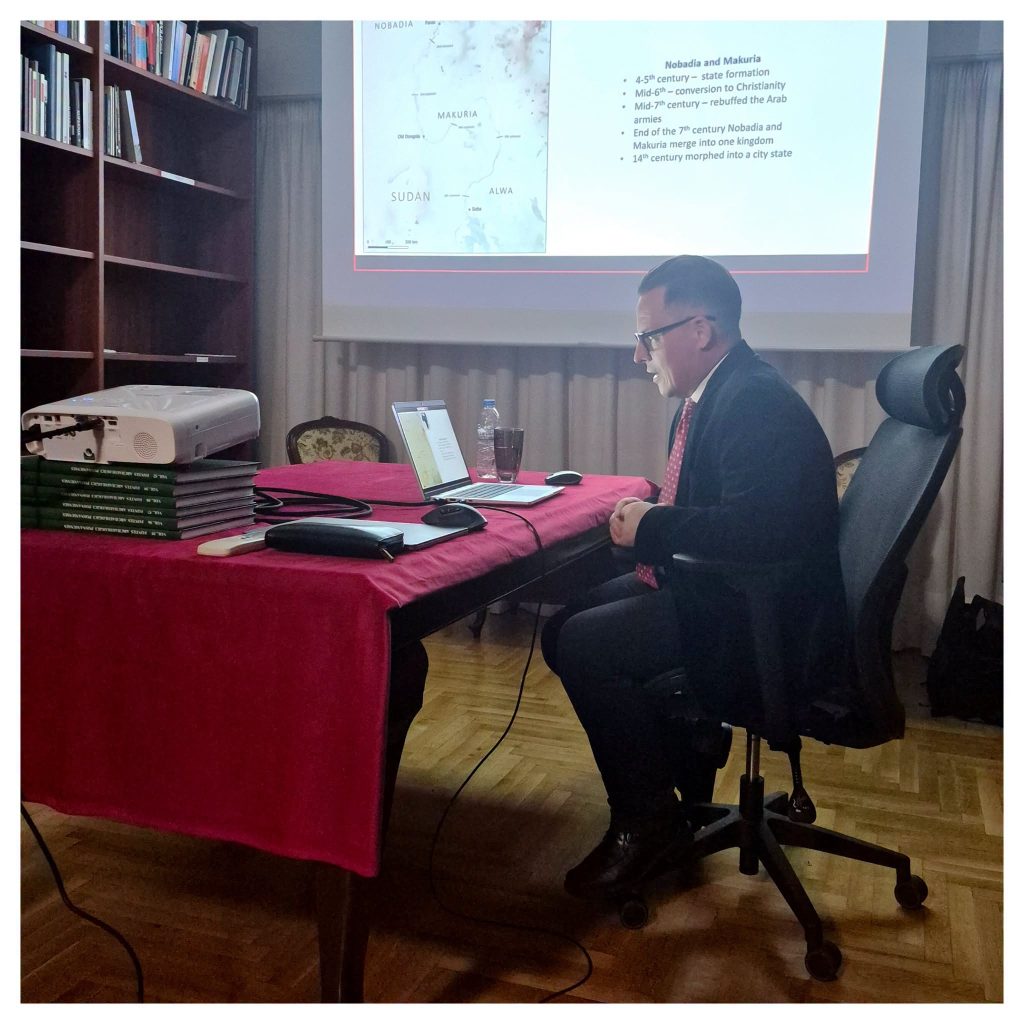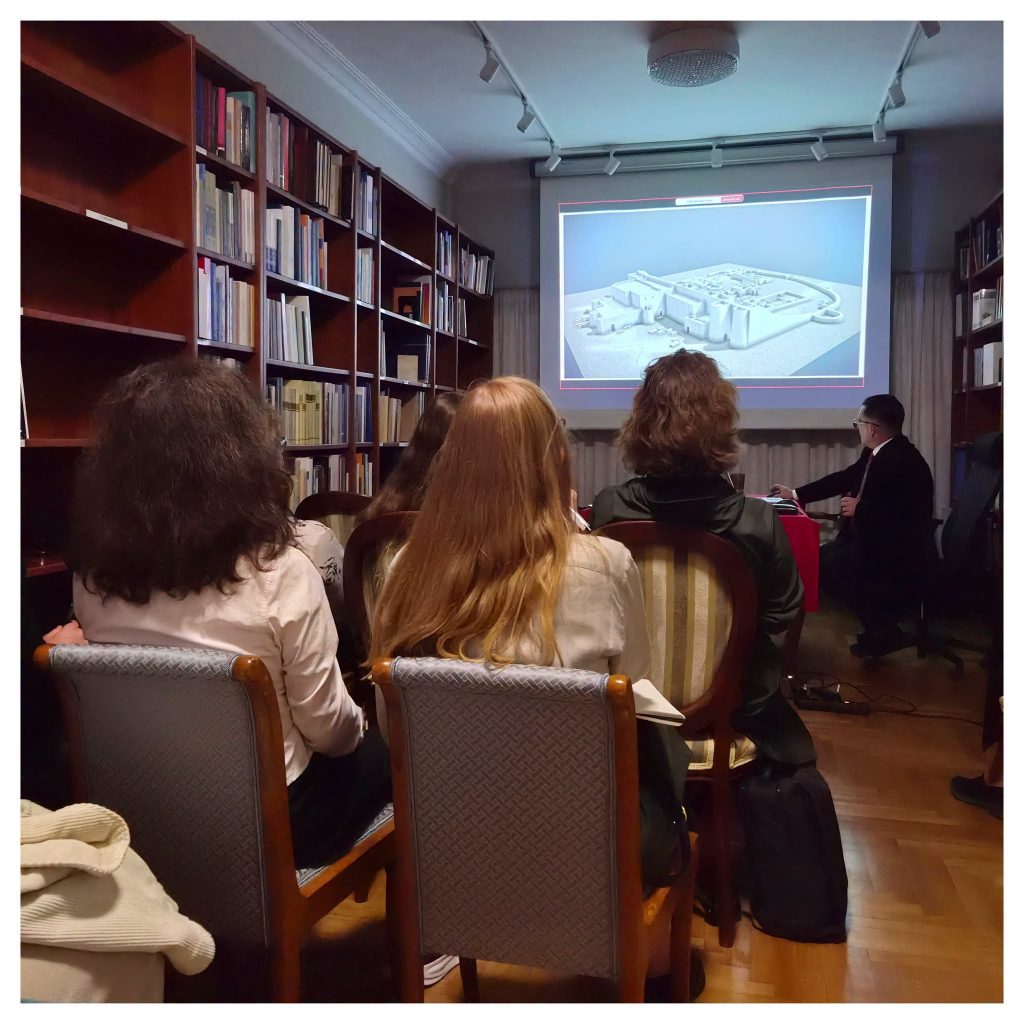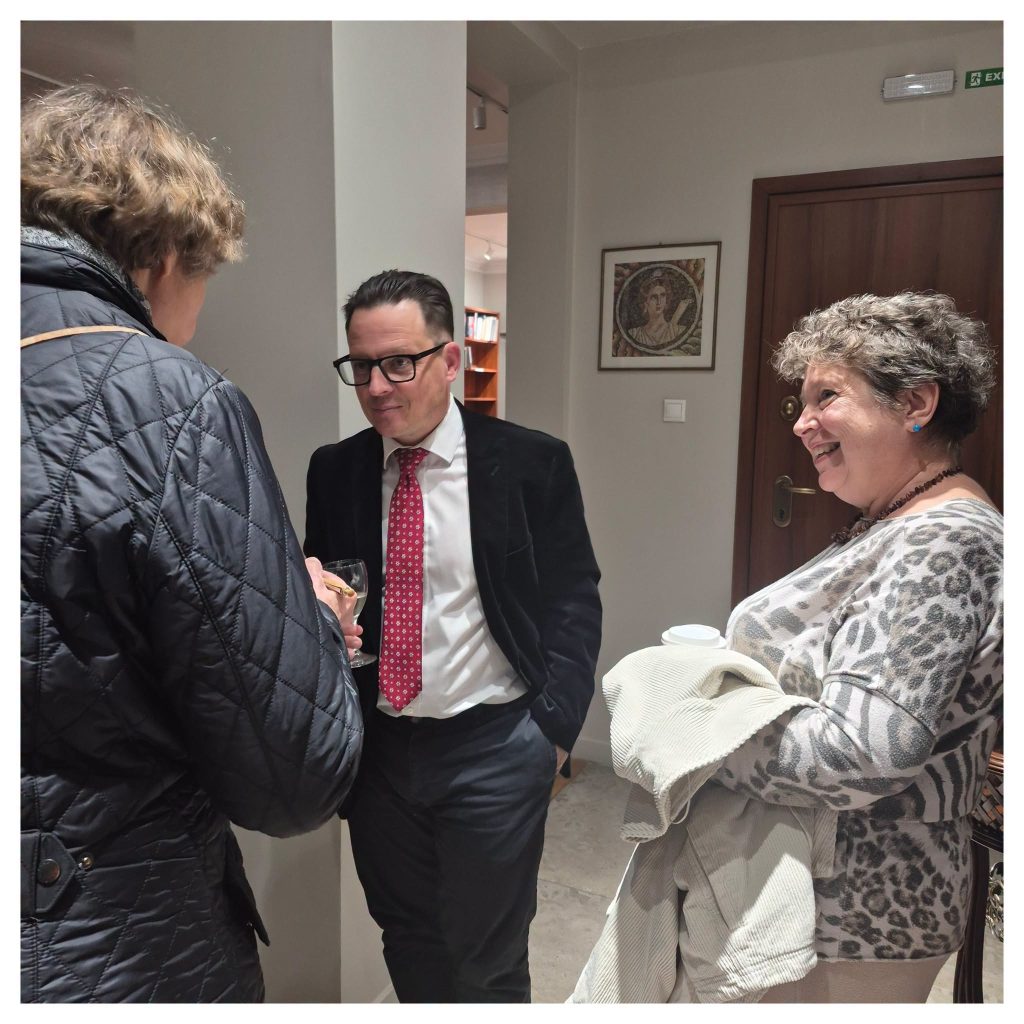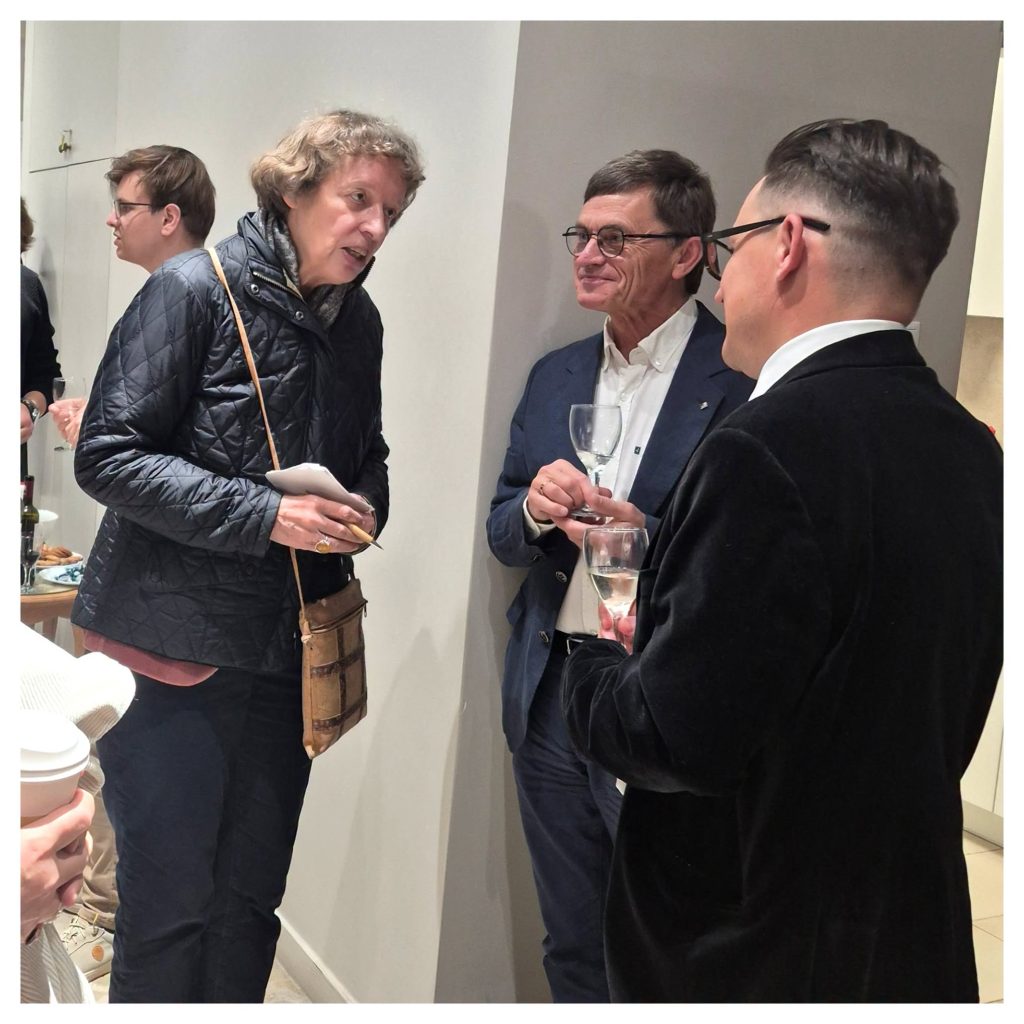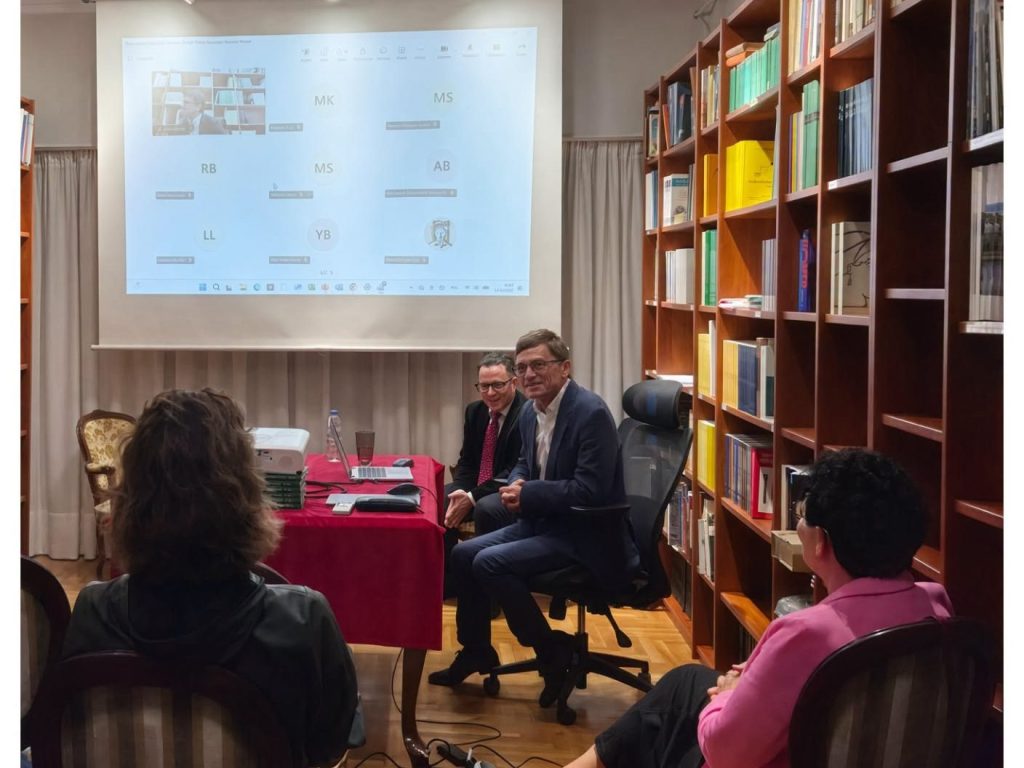
On 14 October 2026, the Polish Archaeological Institute at Athens had the honour of hosting Prof. Artur Obłuski of the Polish Centre of Mediterranean Archaeology, University of Warsaw, who delivered a lecture entitled Nubia: Where Byzantium Became African.
Drawing on six decades of research conducted by the University of Warsaw, Prof. Obłuski explored the religious, political, and social history of Nubia from the fourth to the fourteenth century. He introduced the region’s topography and highlighted recent discoveries by the Polish archaeological team, with particular attention to Dongola, the historic capital of the kingdom of Makuria. These findings offered new perspectives on religious transformation, political authority, and everyday life along the Middle Nile.
An important theme of the lecture was the iconography of Nubian Christianity. Prof. Obłuski discussed how Byzantine iconography, combined with local Nubian visual traditions and motifs inherited from ancient Greek tradition, gave rise to a distinctive local visual dialect. Through this iconography, local elites expressed and reinforced their authority, giving it religious and historical legitimacy by linking it to the Byzantine Empire and evoking the ancient Greek past.
The lecture challenged Eurocentric interpretations that present the kingdoms of northeast Africa as passive recipients of Byzantine culture. Instead, it portrayed Nubian societies as active interpreters and creators of medieval Christian culture—dynamic, sophisticated communities that adopted and transformed wider traditions in accordance with their own political ambitions, religious practices, and local identities.
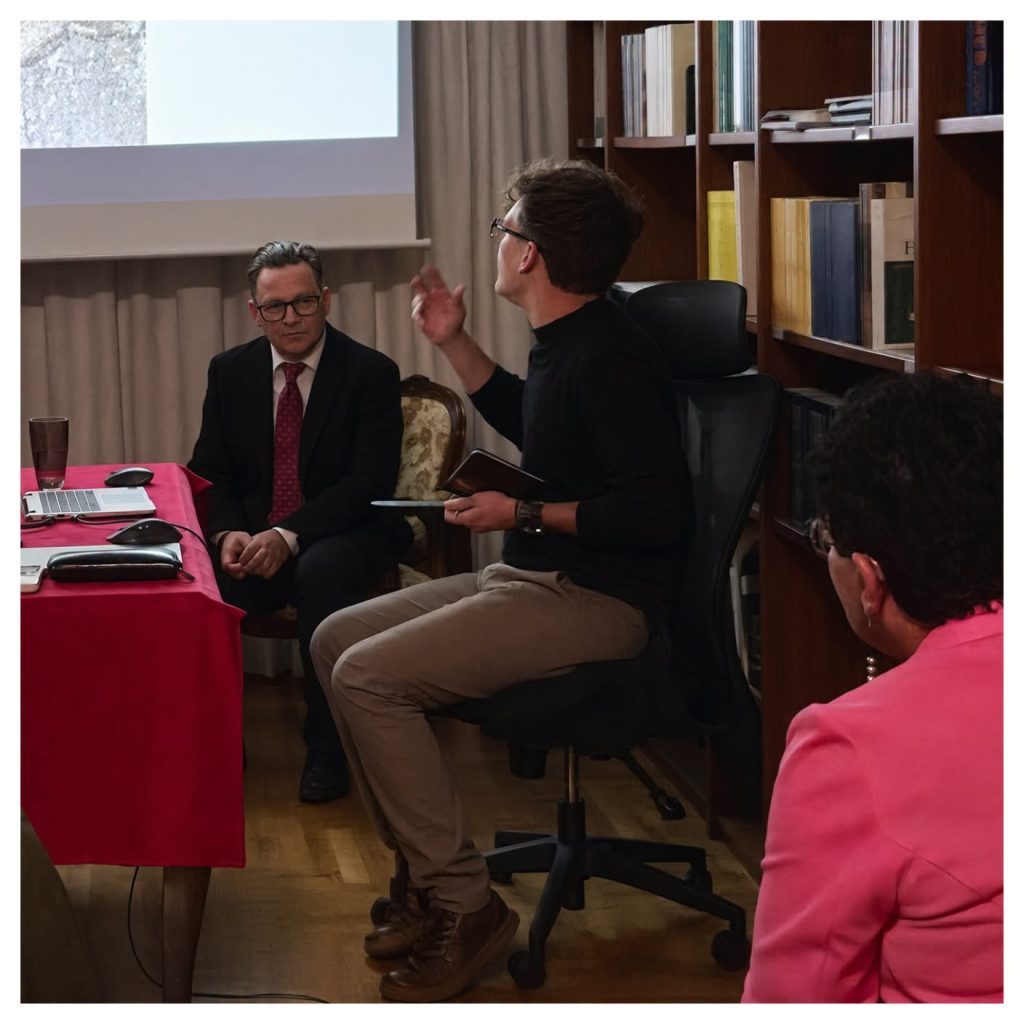
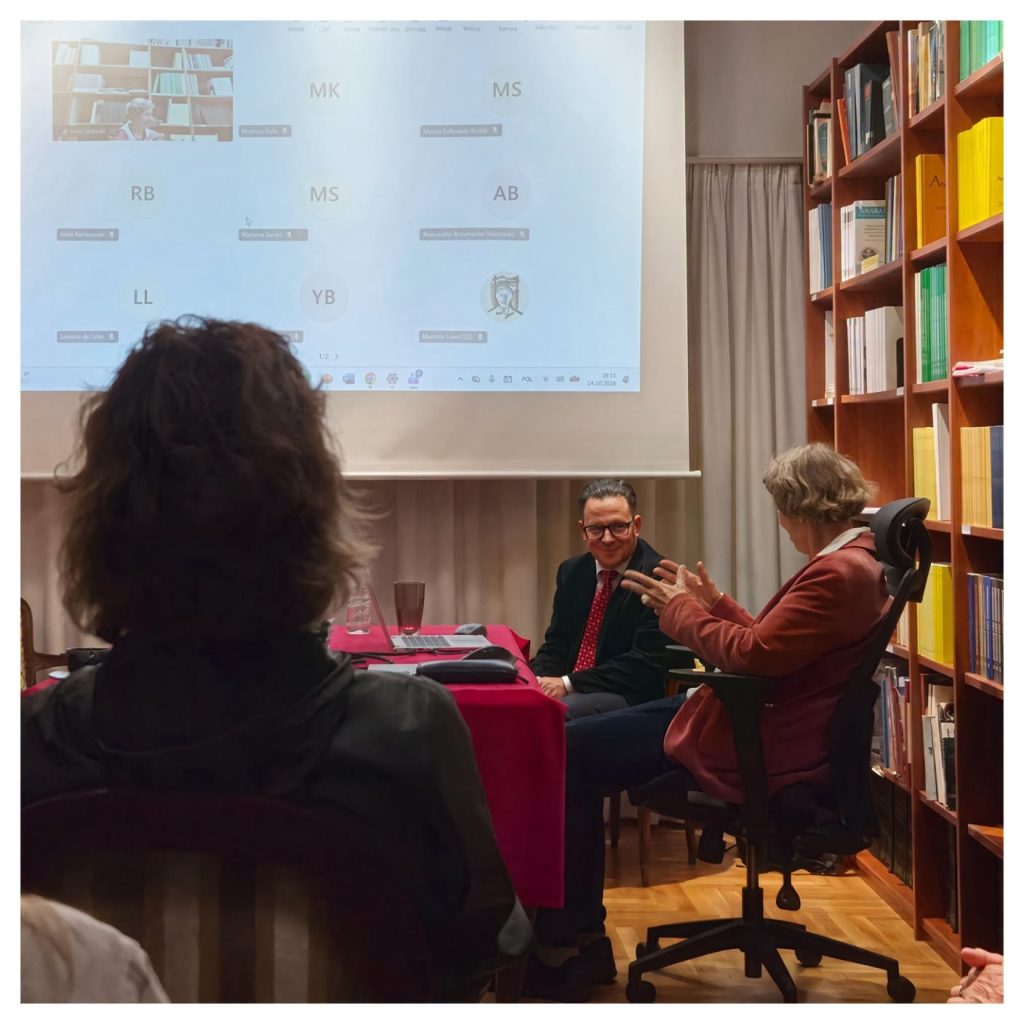
The lecture attracted a large audience, with participants attending both at the Institute’s premises in Athens and online. A lively discussion followed, during which attendees had the opportunity to ask questions and explore the topics further with the speaker. This provided an opportunity for an in-depth exchange on Nubia’s cultural heritage and the contribution of recent discoveries by Polish archaeologists to our understanding of it.